
RevPoints: Points as Money
Try the prototype ↗An unofficial concept for Revolut's rewards programme: show customers what their points are worth, which reward gives them the most, and partner offers that match how they actually spend.
Points nobody can value don't change what anyone does.
RevPoints is Revolut's loyalty programme: customers earn points on card spending and redeem them for stays, airline miles, gift cards and more. Using it myself, I kept running into the same gap. The app tells you how many points you have, but never what they're worth. A programme customers can't value costs money without clearly changing how they behave.
What I found
- The balance and every card payment are shown in points only. One payment earned "+10.38 points", with no way to tell what that means in money.
- The only clue sits far down the page: a £10 gift card costs 1,400 points, so a point is worth about 0.71p. On the free plans you earn 1 point per £10 spent.
- Earn rates use two notations, "15x" for brands and "10 / £4" for deals, and neither says what you get back. At the gift card rate, 10 points per £4 is about 1.8% back.
- Redeeming gets one small section. Most of the page is a long scroll of partner offers, many unrelated to how I spend: I was shown dog food deals, and I don't have a dog.
- Partner earn rates have dropped with little notice. Forum users tracked Apple purchases falling from 10 points per £1 to 1.
- Revolut's terms say points aren't money and can't be exchanged for it, so any value has to be shown as what points buy, never as cash.
The hypothesis
If customers can see what their points are worth in their own currency, which reward gives them the most, and offers that match their spending, more of them will redeem, and the ones who redeem will spend more on their card and be more likely to upgrade their plan.
What I designed
A clickable prototype in two halves: helping customers spend their points well, and helping them earn points on things they already buy.
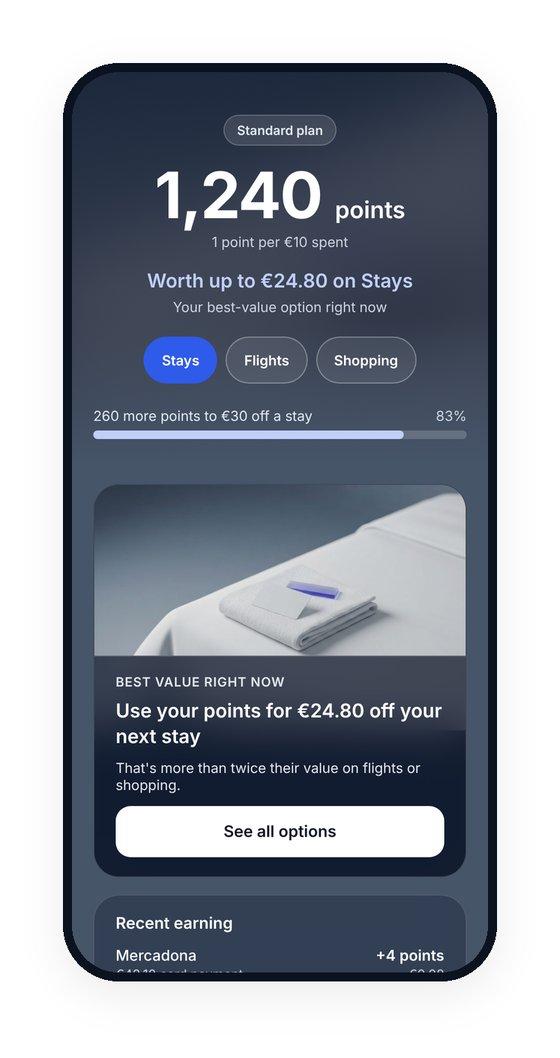
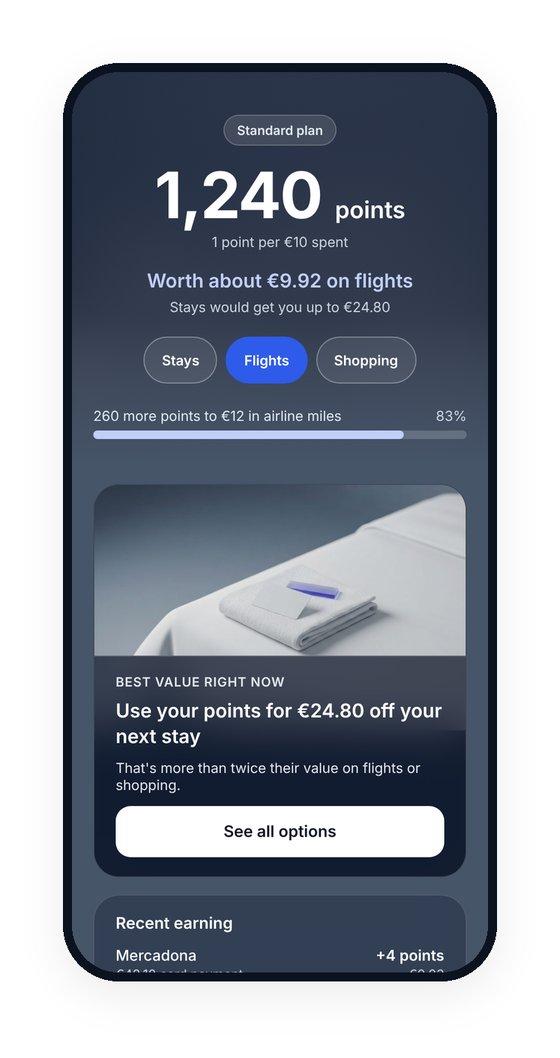
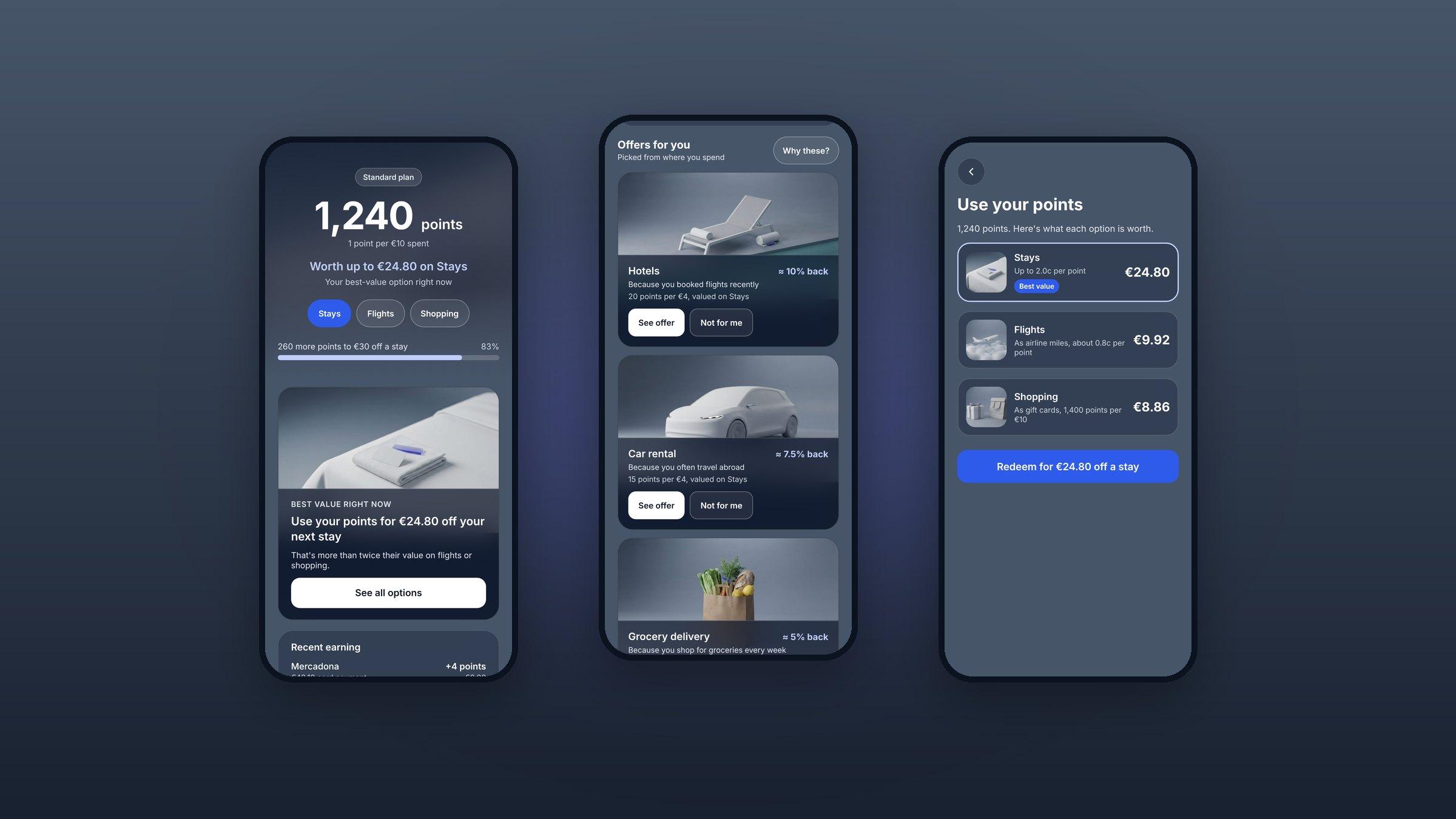
- Points as money: the balance reads "Worth up to €24.80 on Stays", and the value follows the reward type the customer picks.
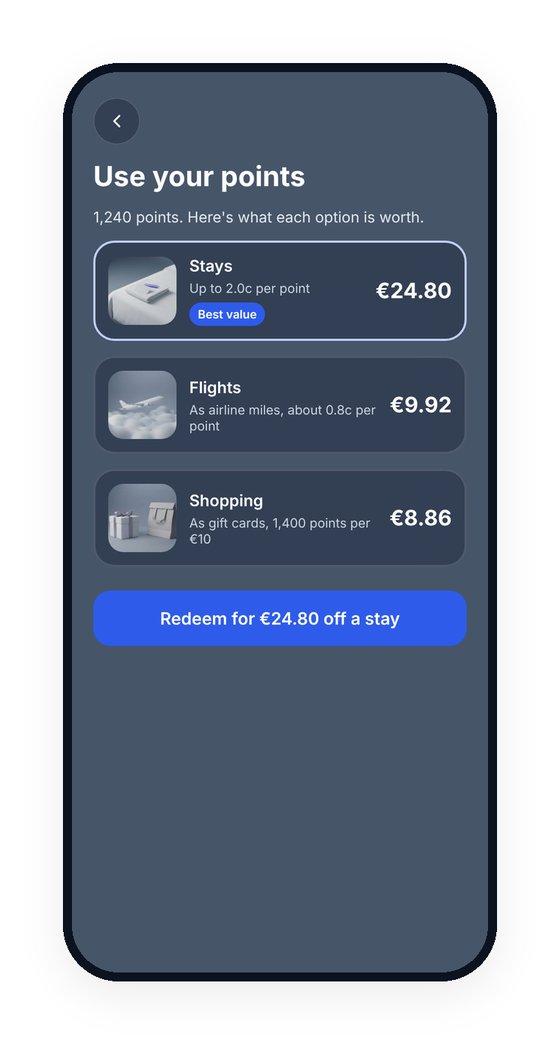
- A best-value recommendation that links straight to the reward worth the most.
- The money value of every card payment, and progress to the next reward.
- A push notification before an earning rate changes, so a cut never comes as a surprise.
- An upgrade preview based on the customer's real spending, instead of a generic Upgrade button.
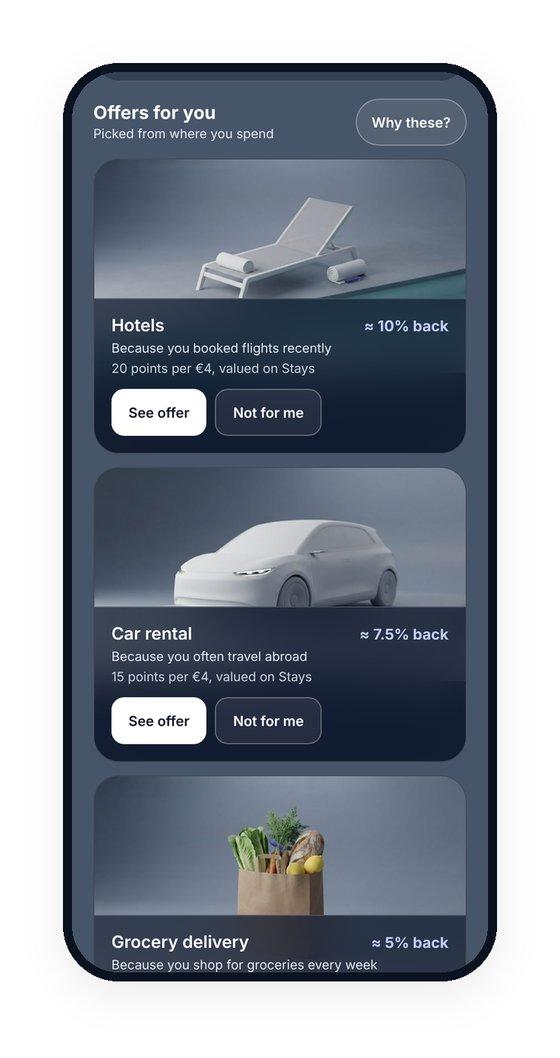
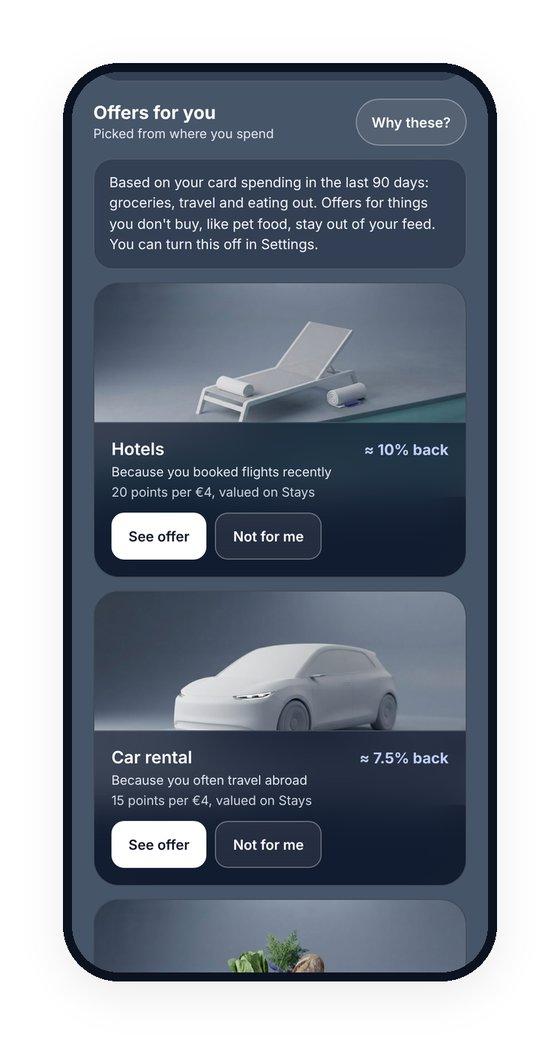
- Offers for you: three partner offers chosen from card spending, each with a reason and a % back figure instead of "10 / £4".
- "Not for me" hides an offer, with an undo, and the next relevant one takes its place.
- "Why these?" says which spending the picks are based on, and that offers for things you don't buy stay out.
- "Browse all offers by category" keeps everything reachable without the endless scroll.
How I'd measure it
- Primary: the share of customers with a points balance who redeem within 90 days.
- Secondary: card spend per active customer, partner spend through offers, and plan upgrades from the upgrade preview.
- Guardrails: the cost of the points liability, the "Not for me" rate, support contacts about RevPoints, and redemptions going to low-margin rewards.
Trade-offs I'd plan for
- Cost: more redemptions mean Revolut pays out more. The bet is that higher card spend and upgrades outweigh it, and the guardrail metric watches that.
- Paid placements: some partners may pay for top spots. I'd test relevance-first ordering against today's feed and compare total partner spend, not just clicks.
- Privacy: personalising on transaction data needs consent, should leave out sensitive spending like health or pharmacy, and needs an easy way to switch it off.
- Regulation: the wording must never present points as cash, so it always says what they buy, like "€24.80 off a stay".
- New customers: with no spending history yet, start them on popular offers and personalise as their history builds up.
How I'd test it
Revolut has the scale for proper A/B tests. I'd start with the money value and the best-value recommendation, since they need no new partners. Roll them out to a share of Standard and Plus customers in one market, compare against a control group for four to six weeks, then expand market by market if redemption and spend improve without breaking the guardrails.
Try the prototype
- Tap Stays, Flights and Shopping under the balance and watch the values change.
- Tap "See all options" to compare rewards, then redeem one.
- Scroll down to "Offers for you", tap "Why these?", then "Not for me" on an offer.
What this demonstrates
Starting from evidence, not opinion. I audited a live product as a customer, checked what I found against public sources and the programme's own terms, and turned it into a concept a team could test: a working prototype, a hypothesis, metrics, and the trade-offs a bank has to weigh.
Sources
Interested in similar results?
Let's work together
Ready to get results like these? Let's talk about your store.
Start Here